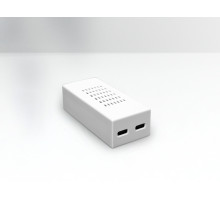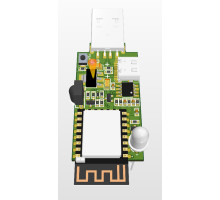
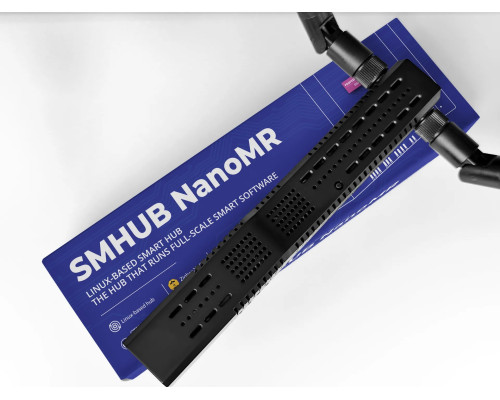


SMHUB NanoMR.
Two radios. One Linux hub.
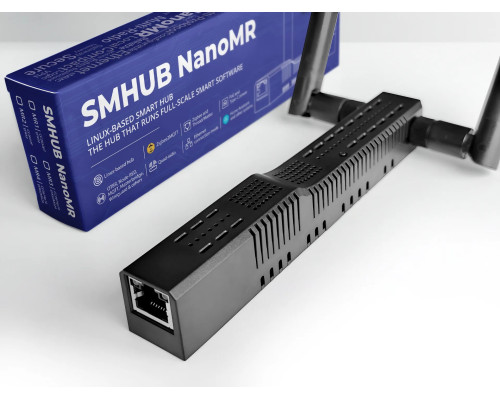
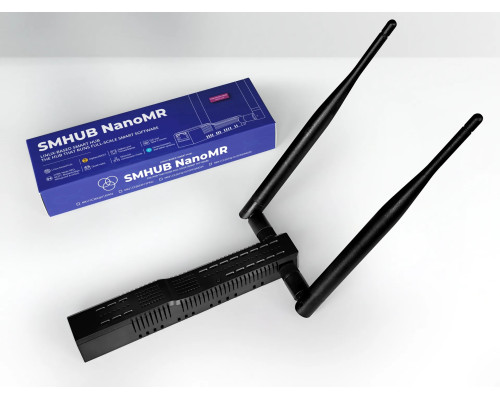
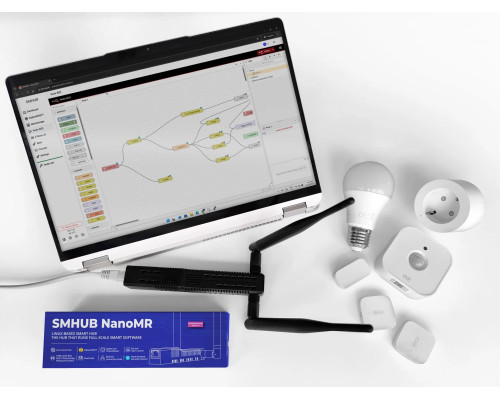
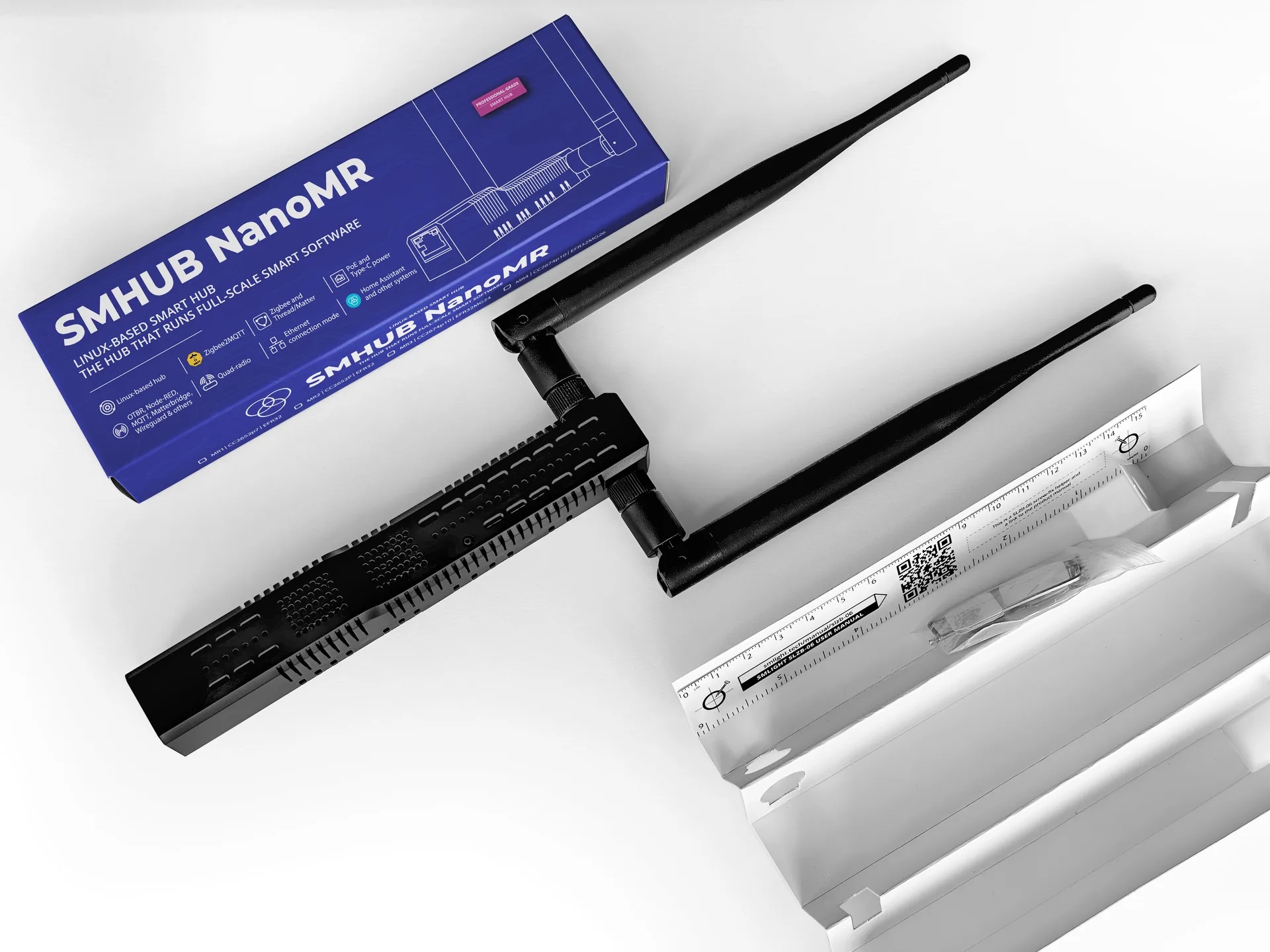
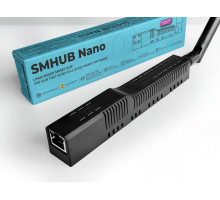
SMHUB NanoMR — is a dual version of the SMHUB Nano. A second dedicated Zigbee/Thread radio chip is added to the first one — now you can run two independent networks simultaneously from the same compact Linux hub, which locally hosts Zigbee2MQTT, Matterbridge, Node-RED, Mosquitto MQTT, and WireGuard.
NanoMR is a full Linux system: applications are installed, updated, and managed directly from the device's web interface.
|
Two radios, two networks
Two independent Zigbee/Thread radio chips run two full networks simultaneously — on one compact device.
|
Standalone smart hub
Zigbee2MQTT, MQTT broker, and Node-RED run directly on the device — smart home control without Home Assistant, if you don't need it.
|
Remote coordinator
Or simply a dedicated dual-radio coordinator for Home Assistant, OpenHAB, or HomeSeer via Ethernet, USB, or Wi-Fi.
|
|
Everything local, no cloud
No manufacturer account required. The web interface, SSH, and all applications run directly on the device — even without internet access.
|
||
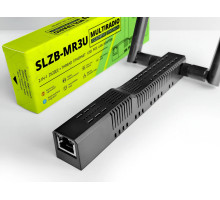
SLZB-MRxU has two radios and SLZB-OS firmware, which is closed firmware without support for installing third-party applications. Zigbee2MQTT, Matterbridge, Node-RED, Mosquitto MQTT, and WireGuard are not built-in firmware functions, but separate applications that can be enabled, updated, and managed independently, directly from the web interface.
|
01
Two radios. Two independent networks.
Run two Zigbee or Thread networks simultaneously: distribute the load of a large network, keep stable and test environments separate, or run Zigbee and Thread in parallel.
|
02
Standalone smart hub
Run Zigbee2MQTT, an MQTT broker, and Node-RED, connect devices, and manage everything from the hub's applications — without Home Assistant or OpenHAB.
|
03
Dual-radio coordinator
Use it as a dedicated dual-radio Zigbee/Thread coordinator for Home Assistant, OpenHAB, or HomeSeer — via Ethernet, USB, or Wi-Fi.
|
|
CPU 2 cores + 512 RAM
1 GHz + 700 MHz — enough power for two radios and several applications simultaneously.
|
8 GB eMMC
Built-in storage for the system and applications
|
Wi-Fi 6 + Bluetooth 5.0
2.4 and 5 GHz Wi-Fi and built-in BLE — in addition to two Zigbee/Thread radios.
|
|
Ethernet RJ45 10/100
Wired connectivity alongside Wi-Fi for a stable network connection.
|
POE or USB-C power
PoE support allows both power and data to be delivered through a single Ethernet cable, eliminating the need for a separate power supply.
|
Compact and fanless
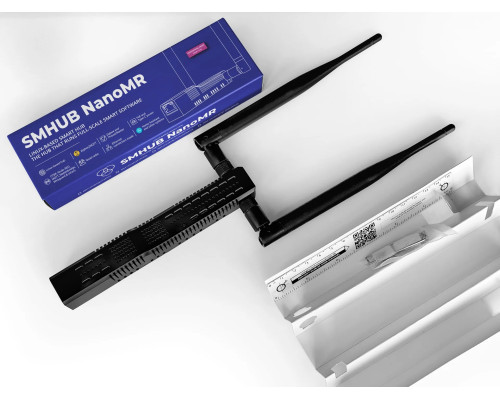
Passive cooling, completely silent. Desktop enclosure, can be wall-mounted.
|
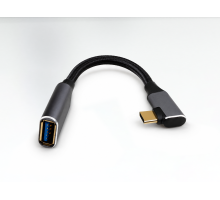
The USB-A port operates in USB Host mode — with an active USB hub, you can add a Z-Wave dongle to NanoMR and run a full Z-Wave JS UI locally on the device, a third radio chip, or a 4G/LTE modem.
This adds virtually any third protocol to the two built-in Zigbee/Thread radios — everything on one compact hub, without a separate server.
|
Zigbee2MQTT
One instance per radio, connecting directly to the Home Assistant MQTT broker or your own broker in bridge mode.
|
Matterbridge
Shows your Zigbee devices as Matter devices in Google Home, Apple Home, or Alexa.
|
Node-RED
Local automations on the device itself — work even without internet or when Home Assistant is down.
|
|
Mosquitto MQTT
Your own MQTT broker on the device for stable operation even during network interruptions.
|
Tailscale and WireGuard VPN
Secure remote access; multiple hubs can be connected into one network through an encrypted tunnel.
|
Web console and SSH (NodeJS and Python)
Full control over Linux through a browser or SSH. OTA updates for the system and applications.
|
Compatibility
| Servers | Home Assistant, OpenHAB, HomeSeer — and any platform that supports Zigbee2MQTT or MQTT. |
| Matter | Via Matterbridge — Google Home, Apple Home, Alexa. |
| Z-Wave | Via USB Host and Z-Wave JS UI with a dongle |
|
Large or split networks — split a heavily loaded Zigbee network across two channels.
|
Standalone hub without Home Assistant — for those who want everything local and simple.
|
Scaling through multiple hubs — connecting locations into one network via WireGuard.
|
|
Experienced users and small companies who need open Linux rather than closed firmware.
|
| Type | Compact Linux hub with two Zigbee/Thread radios, 4 chip-pair variants |
| CPU / RAM | 2 cores · 1 GHz + 700 MHz · 512 MB RAM |
| Storage | 8 GB eMMC, microSD slot up to 2 TB |
| Radio chips | CC2652P7 / CC2652P / CC2674P10 (radio 1) + EFR32 / EFR32MG24 / EFR32MG26 (radio 2) — depending on the model |
| Wi-Fi / Bluetooth | Wi-Fi 6 (2.4 and 5 GHz) · Bluetooth 5.0 (BLE) |
| Ethernet | 1 × RJ45, 10/100 Mbps |
| USB / controls | 1 × USB-A (downstream, USB Host) · 1 button · service LEDs |
| Antennas | 2 × external Zigbee/Thread antennas (one per radio); built-in IPEX for Wi-Fi and Bluetooth, expandable up to 5 dB |
| Power | USB-C, optional PoE module, optional UPS connector |
| Cooling / operating temperature | Passive, silent · 0–50 °C |
| Applications out of the box | Zigbee2MQTT · Matterbridge · Mosquitto · Node-RED · WireGuard · Node.js |
There are no reviews for this product.
No questions about this product.





-220x200.jpg)